Lake and pond building
Pond and Lake Building on Soft Ground
New ponds and lakes, shoreline restoration, and dike and dam repair from Tom Oesch's crews in Atlanta, Michigan.
Water where the road should be
Most ponds start as a problem. A low spot holds water after every storm and the camp road floods out. A shoreline slumps into the lake. A dike or dam that held for years starts to give. Tom Oesch and his crews work these jobs out of Atlanta, Michigan, and the first question is always the same: where is the water coming from, and where does it have to leave?
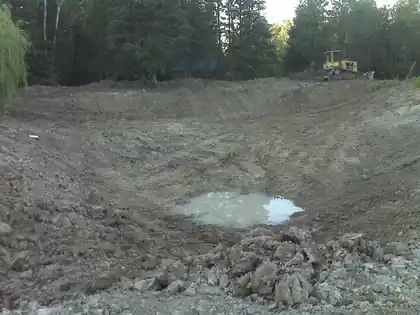
That is how Seth Tuuri's hunting camp job began. A spot was flooding out the roads, so Tom dug a pond in that spot, put in a silt pond with culverts and built the road up around it. Seth's own words are further down this page, exactly as he wrote them.
We have over 35 years of experience on excavating work, and a good share of it has been on ground that fights back: wet, soft, grown over or already dug once.
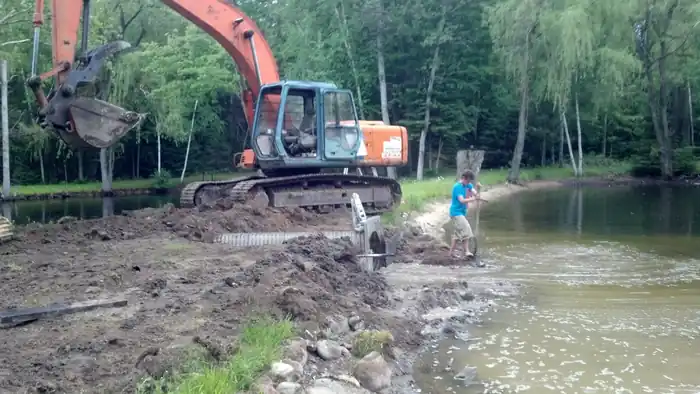
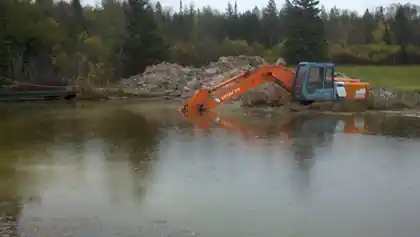
Orange Hitachi excavator on a pond bank, bucket over freshly dug dirt at the waterline
Soft ground, and the machine for it
Soft terrain is where a pond job goes wrong fastest. A heavy machine breaks through the crust, sinks to the tracks and the work stops. We run a low ground-pressure bulldozer on soft terrain, so the dozer can keep shaping banks on ground that would swallow a heavier one.
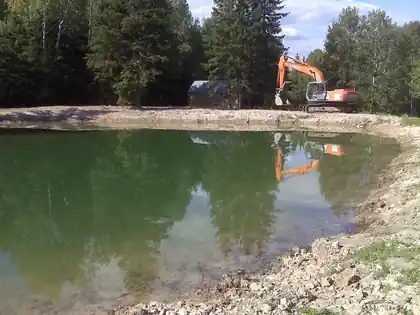
The work covers new ponds and lakes, shoreline restoration and reconstruction, and dike and dam repair. Our orange Hitachi excavators dig the basin and load the trucks. One of them works from the bank right at the waterline.
Where a pond has to take overflow or drain off a road, a silt pond with culverts does that job. Culvert pipe, steel and plastic, is on our supplies list, and drain stone and fill dirt come out of our own yard.
Banks shaped to hold, then trout
Aftercare on a pond starts with the banks. We shape them to hold, and we finish the edges where dirt meets water so the shoreline is a place you can walk, not a mud line you avoid.
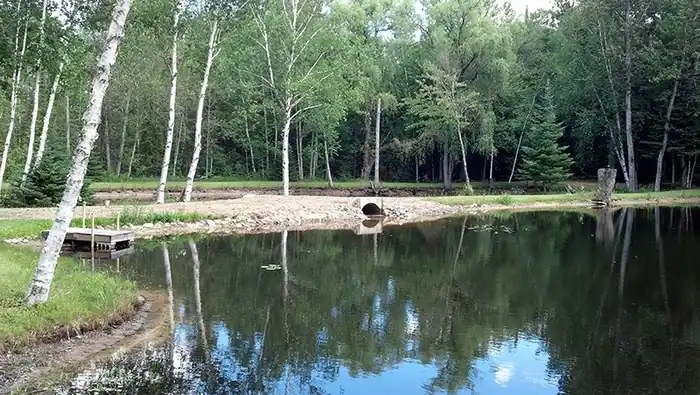
Seth's pond is stocked with trout now, and his kids swim in it all summer. That is the end result we are after on every pond: water that stays where you put it, a road that stays dry, and a bank that holds.
We'll get your construction or restoration project completed within the time frame you've laid out, with the results you expect. A free estimate comes first, and a representative will contact you within the next business day.
Tom Oesch's crews dig ponds, rebuild shorelines and repair dikes across Northern Michigan. Call (989) 742-1003 and ask for the free estimate.
“He dug me a beautiful pond in a spot that was flooding out our roads, he even put in a silt pond with culverts and built up the road around it. It is a great design and we now have it stocked with trout and my kids swim in it all summer!”
Seth Tuuri, Google review
A pond cut where the roads flooded
Our gallery keeps pond work in two sets, Dikes and Finished Pond. The full run is in the pond and dike photos in the gallery, and the pond estimate request form is the way to start your own.
Dikes
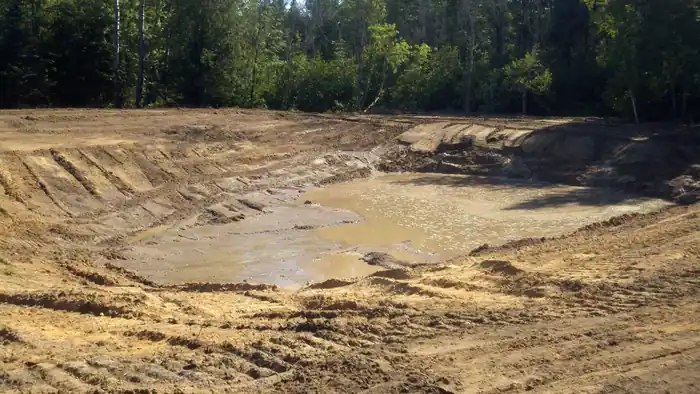
Finished Pond